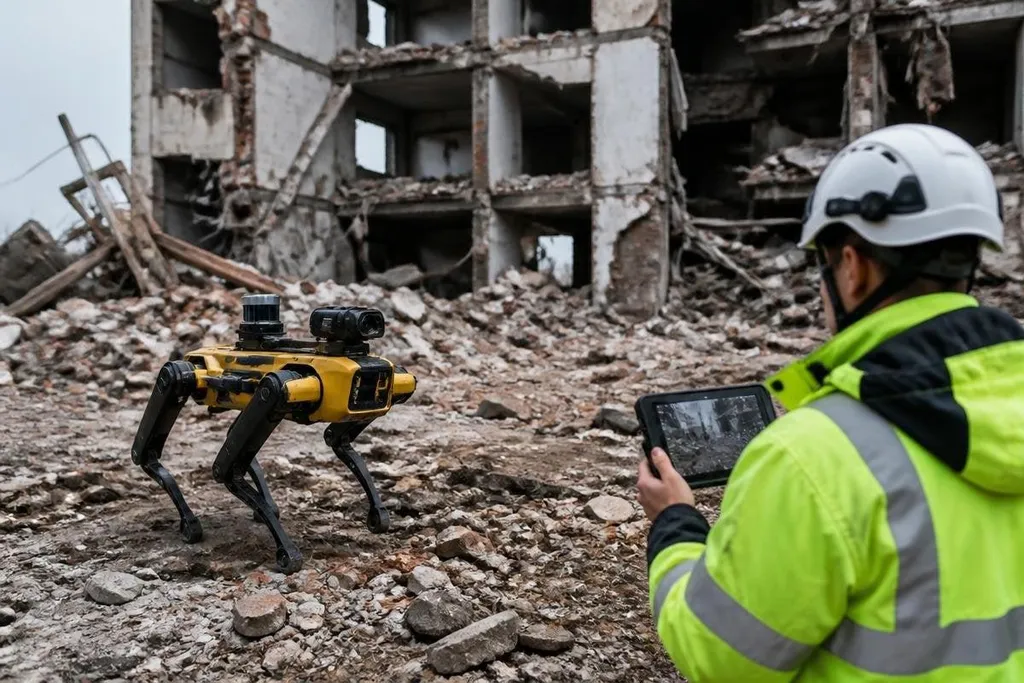
A robot dog can enter a damaged building, move across rough ground, and send video back to a remote operator. Those abilities could shift some dangerous work away from people, but each job still depends on sensing, control, power, and a safe way to stop.
Quick read
- Four legs help a robot dog cross ground that can block wheeled machines.
- Cameras, thermal sensors, and microphones can give operators a view from unsafe areas.
- Autonomy can help with routine movement, but people still need control when conditions change.
Where a robot dog could help
The clearest use is inspection. That machine could walk through a site after a fire, earthquake, chemical leak, or industrial accident while its operator stays outside the danger zone. Its cameras could show blocked doors, fallen structures, or damaged equipment before a person enters.
The same approach could help with work near heat, smoke, radiation, or unstable ground. The machine can carry a sensor into the area, take readings, and return with the data. The job may still need a trained person, but that person gets information before choosing where to go.
Security patrols are another possible task. A robot dog could move along a fixed route, check doors, and send an alert when its sensors detect a change. That works best in places with known paths and clear rules for what happens after an alert.
Search work would be harder. Rubble can block legs, shift underfoot, or hide people from the robot's sensors. It may reach a narrow space that a wheeled system cannot, yet reaching the space does not mean it can lift debris or help an injured person.
How the machine would do the work
The robot needs a map of its surroundings, sensors to track its position, and motors that adjust each leg as the ground changes. Many systems can also receive commands from a remote operator, who may guide the machine around an obstacle or send it back to safety.
Autonomy means the robot handles some movement on its own. It may follow a route or keep its balance while the operator focuses on the sensor data. That division matters because a person may struggle to control every leg while also watching a live video feed.
The robot's payload matters too. A small camera may be easy to carry, while a gas sensor, radio unit, or tool adds weight and changes how long the battery lasts. Every added device can reduce walking time or make steps less stable.
A report that names the robot dog, job site, task, and test result gives the battery tradeoff useful context. Robotics job-site reports from Robot24.com can supply that record before you decide whether the machine belongs near a dangerous work area.
The limits are physical
A robot dog still needs power, a clear signal, and a route it can cross. Smoke can reduce camera quality. Water can damage hardware if the robot lacks the right protection. Loose cables, broken stairs, and deep mud can stop a machine that walks well on a clean test floor.
Remote control also has limits. A radio link may weaken inside a concrete structure or underground site. If the link drops, the robot needs a safe response, such as stopping, returning along a known route, or waiting for the operator.
Safety rules matter when the robot works near people. A machine that carries a camera presents one set of concerns. A machine that carries a cutting tool, inspection arm, or heavy load presents another. The job plan needs a clear boundary between the robot, nearby workers, and the person controlling it.
The record for many proposed uses is still thin. A demonstration can show that a robot crossed one obstacle; it does not show how the system handles hours of dust, poor radio coverage, repeated falls, or a failed sensor.
I'd keep robot dogs on inspection and remote sensing until field results show they can manage the harder tasks.
A practical decision guide
Before assigning a dangerous job to a robot dog, check these points:
- Define the task: Write down the exact action, route, sensor load, and result the team needs.
- Map the hazards: Mark heat, water, unstable ground, dust, radiation, moving equipment, and people.
- Set the control mode: Decide which steps the robot can handle alone and when an operator must take over.
- Plan a safe stop: Choose what happens after a lost signal, low battery, fall, blocked route, or sensor fault.
- Test the return path: Make sure the robot can leave the work area with its payload and enough battery.
- Review the evidence: Ask for field results that match the job, not a short clip from a clean test site.
That last check will decide where the technology goes next. Robot dogs may reduce human exposure to danger, but a machine earns that role only after it can sense trouble, stop safely, and return with useful data.